



The Art of Making the Right Decisions
There is much talk about the system of values that each of us holds and should follow in life. Usually, it is a set of principles combined with a mission — whether that of an organization or an individual. During my workshops, consulting sessions, and conversations, I often notice that people try to create the most original and admirable set of values to guide their lives. Yet, I always find myself wondering — why reinvent the wheel?
The core values have been with us, as human beings, for thousands of years. They are systems instilled in us by our parents, shaped by our upbringing, environment, culture, and religion — regardless of belief or faith. This moral framework is, in essence, very simple, and precisely for that reason, so difficult to practice consistently in everyday life.
Just as the foundation of success in business lies in setting a clear goal, defining a method to achieve it, and taking consistent action — instead of endlessly outlining strategies and dreams on paper — the foundation of a good and meaningful life lies in following a simple, universal code of conduct. A code that transcends professions, borders, and beliefs, and comes down to one timeless rule: do good.
How many times have we heard someone described as a good person?
And how many times have we truly wondered what that really means?
Do we have to perform great deeds or save the world to earn that title?
Fortunately, no 🙂 Goodness reveals itself in small things — in our daily choices, gestures, and behaviors. We often think: “I’m a good person. I don’t steal, I don’t kill.” But are we really?
Is theft only the act of robbing a bank in broad daylight, or does it come in many shades of gray we prefer not to see? Is lying only the deliberate telling of falsehoods, or does it also include omitting key details or subtly manipulating the narrative so that someone reaches the wrong conclusion?

Before Christmas, I placed a large order from Zara with the intention of trying on all the clothes that caught my eye in the app, keeping only those that fit best, and returning the rest. Since I was certain I’d be sending back at least half of it, I didn’t pay much attention to the prices — after all, not everything would stay with me.
When the packages finally arrived, I spread them out across the table and began what could only be described as a full-blown fashion show. My beloved cat sat quietly on the couch, observing the commotion. I left the room for a moment to grab a glass of water. When I came back, I froze. There he was — sitting comfortably in one of the boxes, right on top of a premium wool dress, calmly clawing a hole straight through the middle of it.
I was seconds away from a heart attack. The only thing keeping me conscious was a mix of despair and fury — I hadn’t even tried the dress on yet! I didn’t know if it fit, I hadn’t cut off the tag, I hadn’t even decided if I wanted to keep it.
Of course, after throwing the cat out of the box, my first instinct was to limit the damage. My immediate thought was: “I’ll just return it and say it arrived like this. How could they even prove otherwise? Besides, the customer is always right — especially when it comes to big corporations.”
So, with a heavy heart but unwavering focus, I started packing the return — still glancing obsessively at the price on the receipt, hoping it might somehow go down (it didn’t). And then, right in the middle of my “brilliant plan,” a thought struck me: “But this is fraud. You don’t deserve a refund.”
Naturally, I tried to reason my way out of it. “If it were a small local business, of course I wouldn’t return it. But Zara? They charge huge markups and exploit their workers. They can afford it.” For a moment, I even convinced myself I was a tiny flicker of karma delivering cosmic justice.
But the longer this internal dialogue went on, the clearer it became: it doesn’t matter who you deceive — deception is still deception. It’s not our role to judge others or decide who deserves punishment. Yet that’s exactly what I was doing — justifying my behavior by appointing myself judge and executioner of a fashion empire.
If I truly believe that Zara’s practices are wrong, the only honest response is simple: stop buying from them. Does stealing from someone wealthy or distant make it any less of a theft just because, in our eyes, “they can afford it”? Unfortunately, no.
When it comes to core values — or really any ethical principles, especially those simple and clearly defined — the answers to what’s right or wrong are usually obvious. Deep down, we always know. But out of convenience, fear, or self-interest, we try to silence our intuition and moral compass.
If we feel uncertainty, shame, or discomfort, it’s often because we’re violating our internal code of ethics (though in the case of these emotions, their causes may also stem from other reasons and not necessarily from improper behavior). In those moments, we start rationalizing, justifying, and bending reality — though somewhere deep inside, we already know the truth.
"No! It wasn't like that. You don't understand, I had to!

How often do we hear such justifications? And what do we think in those moments? The truth is, we rarely look at situations objectively. We tend to let emotions take over, influenced by the subjective views of our family, friends, and those close to us.
When I returned to work after the holidays and told my colleagues about the incident—omitting my reflections about doing the right thing—the most common reactions I heard were: “Don’t worry, just return it, they probably won’t notice,” or “What did you do to the cat?” or “Tell the store it came like that, they’ll give you a refund.”
They said those things not because they were bad people, but because they felt my sadness and wanted to help. However, one cannot help some by hurting others. No good fruit will ever grow from wrongful actions. Their judgment was clouded by our friendship and the affection they had for me. They didn’t stop to think about the situation objectively—they saw only one side of the equation: poor Ola, wronged by fate (and by her cat), who happened to suffer misfortune the moment she treated herself to something from the premium collection.
They tried to protect someone from their own circle, without realizing that one day, someone might treat them the same way—and then the conversation would be very different. We would sit together, wondering how to deal with such a “fraud.” We must learn to look beyond the tip of our own nose and the interests of our “tribe.”
I believe the greatest expression of friendship and love we can offer another person in such moments is to tell them the truth—as we see it. The path of good deeds and right choices is often uncomfortable, just like genuine and honest relationships. We won’t always receive praise or approval from others.
Sometimes, the best thing someone can do for us is to point us toward becoming a better person—even if that journey is painful and filled with stones. A true friend is someone who will tell you the truth, even when it’s uncomfortable, unpleasant, or painful.
„I believe the truth is offensive only when we lie”
Matthew McConaughey
My grand shopping spree at Zara ended with me keeping a damaged dress from their premium collection—too big, but still soft to the touch. After all, it cost so much that if it had also turned out to be itchy, it would have been the final nail in my coffin.
I decided to let it go—perhaps I’d find a way to patch it up. I went to tell my husband about my dramatic misfortune, expecting him to mourn the loss even more than I did. To my surprise, he was one of the very few people in my circle (besides my mom) who didn’t even suggest returning the dress to the store. He simply said he was sorry that my shopping trip had ended in such a fiasco and reminded me how beautifully I embroider—surely, I could manage to mend that gaping hole quite well.
At first glance, it looked like I had suffered a loss. But from the moment I made the right choice, I’ve felt at peace. I look at myself in the mirror and think, yes, I am a good person. Not because I donated a fortune to an orphanage, but because I made the right choice.
I had every opportunity to deceive someone, to shift the loss onto another person, and to save myself from inconvenience. But I chose differently. Let’s not forget that behind Zara, too, there’s a human being—someone who likely earns more in a second than I spent on that dress—but that’s not the point. The goal isn’t to be a hero in the eyes of the person you graciously decided not to cheat. It’s about being a hero in your own eyes. It’s about respecting yourself.
How could I expect others to act with integrity if I allowed myself to make exceptions in my own life?
"[...] It is worth being a decent person at all times, even if it does not always pay off".
Anna Dymna
In business, much is said about the art of making the right decisions. In everyday, private life, this is an equally essential skill.
For those of you who thought, “Oh, Ola is wonderful, she did the right thing!” — I say firmly: STOP!
Yes, bravo to me — for choosing to act with integrity. But on the other hand… is that really something we should praise and celebrate? Shouldn’t it simply be standard — something ordinary and natural?
So instead of patting me on the back for not stealing, let’s take this story — trivial as it may seem, about a Zara dress — and use it as an opportunity for deeper reflection.
If until now you haven’t really considered such situations and usually did what felt convenient for you, this is not the moment to dwell on your “sins” or bad decisions, nor to punish yourself with guilt for months on end. This is the moment to change something! Remind yourself of your fundamental values and start making the right choices — even in small things. And remember: doing good isn’t always comfortable or pleasant in the moment, but in the long run, it always brings peace and a quiet sense of fulfillment.
If you don’t want to do it for others — out of love for your fellow human beings — do it for yourself. Because it’s you who spends the most time with yourself, who holds the most conversations with yourself, and whose face you see most often in the mirror. There is no self-confidence or self-worth without self-respect. And that respect fades when we start acting against our integrity. You can change your wallet and wardrobe every year — but you only have one soul, no matter what your beliefs are.
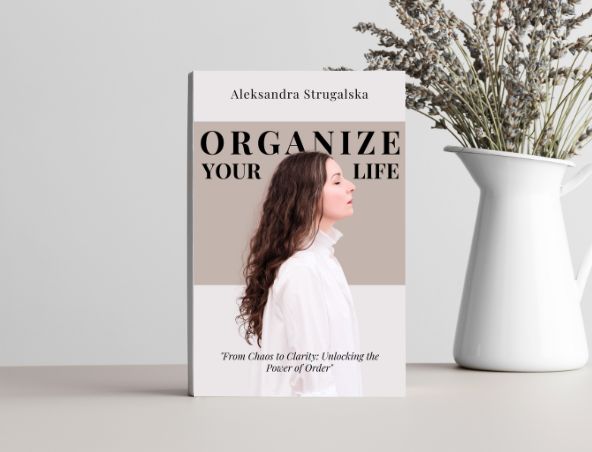
Organize your life.
The first publication in the Untold product series, created to share methodology for organizing everyday life, cultivating systematic discipline, and developing proper habits. Drawing from the author's experience, knowledge, beliefs, and commonly available coaching tools, she aims to inspire you to take action and present you with a straightforward approach to achieving fulfillment and building self-esteem. Written in a simple way, it contains examples from everyday life, practical tips, exercises, and beautiful graphics. Available in e-book and audiobook.



Leave a Reply