


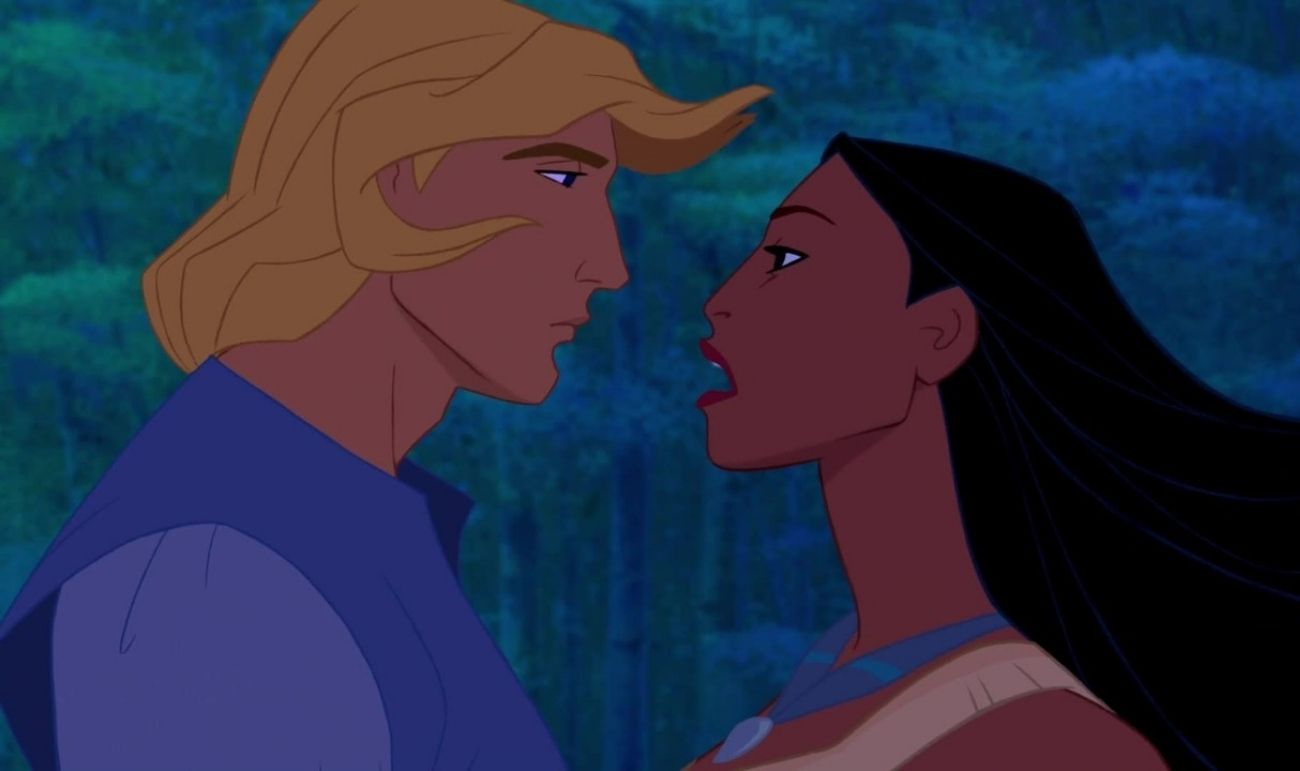
Savages! Barely Even Human
An inseparable part of my Spotify playlist are songs from Disney movies—mostly the old ones from the 90s, because I grew up with them. Yet only recently have I begun to understand them on a deeper level, to truly admire the genius of their creators anew. Don’t get me wrong—I’ve always loved them. Whether my parents realized it or not, these songs became the foundation of my upbringing and the values I live by.
What’s remarkable about the old Disney movies is that they speak to both children and adults. They are full-length works of art—from the hand-drawn animation to the script, all the way to the music. For the younger audience, they teach fundamental values and introduce them to the complex world of adults, carrying with them timeless wisdom that many older souls tend to forget. Personally, they always make me reflect deeply and challenge me to see every shade of gray within the stories they tell.
Sometimes I wonder if I chose a career in the IT industry because the world there is “binary.” It’s much easier to navigate a reality where something either works or doesn’t, where it’s black or white. Unfortunately, everyday life isn’t like that. There are no people who are purely good or purely evil, entirely wise or completely foolish. Reality is far more complicated.
In Pocahontas, the story touches on the subject of race. The English, led by the greedy Governor Ratcliffe, arrive in the New World seeking land and gold. Yet those lands are already inhabited by Native American tribes. One could think the story is about human greed—but to me, it’s directly about discrimination and prejudice. About those moments when we assume that people of a different race, faith, or opinion are somehow inferior to us simply because they are different.
„They're not like you and me
Which means they must be evil ”
Marie Skłodowska-Curie once openly said that people fear what they don’t understand. In fact, we often simply dislike things—or even people—we don’t know. We resist getting to know them because we’re trapped within the walls of our own limitations and biases. The greatest obstacle, therefore, is ourselves. If we don’t open our minds and hearts to other perspectives, we’ll remain prisoners in a cell of our own making.
The best way to break free is to let go of prejudice and allow yourself to admit, “I might be wrong.” More precisely—to assume that everything you believe or think you know might not be true. Not to undermine your value system, but to expand your horizon.
I wrote about this—though not directly—in one of my blog posts titled “Feeling Inspired? Take Action!” There, I asked the question: Who sets the rules? and encouraged readers to consider that perhaps there are no rules at all—that we can create our own, according to how we want to live. The same principle applies to our beliefs. We can give ourselves a clean slate. The key is to ask questions with openness and genuine curiosity—just like a child would.
During one of my client meetings, I once heard:
“You know how it is with employees.”
Out of curiosity, I asked, “What do you mean?”
He replied, “No one wants to work. And when they finally do, they do nothing and still expect to be paid well.”
I truly wondered why he thought that way, so I asked, “Why do you think that happens?”
He sighed and said, “We’ve spoiled the younger generation. We give them all those benefits, so why would they bother working?”
My own experience is completely different. I have a wonderful team—people who come to work with enthusiasm. We enjoy spending time together and collaborating on projects. None of them are over thirty (yes, I’m the oldest one on the team). I told him this, and he looked at me oddly, his lips pressed into a thin line. Not realizing how emotional this topic was for him, I asked another question:
“Do you think things would be different if you built a team that shared your values and clearly communicated expectations?”
And that’s when it started—a small emotional storm. The client felt attacked, even though my questions came from genuine curiosity. Suddenly, I became the target of defensive profiling. I was told I was young and naïve, that I didn’t understand the real world, that his industry was nothing like mine, and that my remarks wouldn’t help him. He even said, “Ask your husband how it looks in his company.”
What happened here? My open questions were perceived as criticism. I was then categorized—by age, by gender, by supposed inexperience. The client had a chance to pause and consider: Maybe I’m wrong. Maybe my assumptions aren’t universal. But instead, he chose the familiar path—defending his beliefs, protecting his ego. It would’ve taken just one thought—“Maybe I’m recruiting the wrong way?”—to open a dialogue and shift perspective.
But how many of us are truly capable of doing that?
Now imagine if, instead of an adult client, a child had been sitting across from me. Would they have reacted with passive aggression? No. They would have thought about it—and answered honestly.
Don’t get me wrong—I have my own biases too. It’s not easy to go against them, but it’s possible. You can learn to listen deeply, to pause before reacting, and to engage with others without attaching your own labels to everything they say.
„They're savages, savages
Barely even human ”
We fear what is different because we do not know it. It feels easier and safer to follow familiar paths, guided by the rules and habits we’ve long mastered. Repetition gives us a sense of order and peace—but it is from chaos that true change is born.
All great philosophers, thinkers, visionaries, and entrepreneurs have challenged established norms, broken patterns, and questioned even their own beliefs—all in pursuit of truth. And truth is liberating; it opens our horizons and expands our awareness.
All prejudice stands in opposition to truth—and therefore, in opposition to freedom, the very thing we claim to desire most. But if we truly long to be free, perhaps it’s time we finally allow ourselves that freedom—by letting go of the beliefs that harm both others and ourselves.
„Beneath that milky hide
There's emptiness inside
I wonder if they even bleed
They're savages, savages ”
Pocahontas possessed the mind and spirit of a mischievous child. She broke the rules imposed upon her — “Don’t go near them, don’t go out after dark, don’t wander alone” — because, like a child, she didn’t think of consequences. Her curiosity fueled a deep desire to explore the unknown. Instead of accepting the common belief about the “white devils,” she chose to see for herself who these newcomers truly were.
Of course, things might have turned out differently had she, with the same innocence and openness, met someone other than John Smith. But I don’t believe it’s worth dwelling on the tragedy that could have happened but didn’t.
As the story unfolds, the situation becomes increasingly complex. The heroine doesn’t know what to do — she is torn by conflicting emotions and feelings toward both sides. Having come to know each of them, she understands their reasons, yet feels divided. Too much has happened for her to fully belong to either group.
This observation leads me to one conclusion: Pocahontas approached the world with a blank, unwritten page. She observed, learned, and experienced — and through that, the page became filled with insights that allowed her to see clearly and choose consciously. Guided by the core values she lived by — truth, love, and kindness — she made a brave and difficult choice. She stood against both sides, rejecting their mutual prejudice.
She made her own decision.
„I don't know what I can do
Still, I know I've got to try
Eagle, help my feet to fly
Mountain, help my heart be great ”
Standing against the crowd and holding an unpopular opinion is never easy—it often means facing rejection, at least for a while.
Yet it is far better to make a decision that feels true to yourself than to betray your own soul and heart out of fear.
Because will you still be able to look yourself in the eye afterward?
Will you be able to see yourself with love, instead of the quiet conviction that you were a coward?
Will you be able to forgive yourself—and live a life that feels truly whole?
Choosing to free yourself from limiting beliefs, to ask questions, and to challenge the reality you live in requires courage.
Choosing freedom over conformity is, in itself, an act of strength.
Speaking the truth—and facing the truth—are among the bravest things a person can do.
Looking at your reflection in the mirror, seeing your true self with all its flaws and virtues, and not turning away—that is the very essence of courage.
The same applies to seeing another human being.
Only when you look with love and an open mind can you truly see someone—everything that lies within them.
I used to wonder why the line from Avatar, “I see you,” struck me so deeply. Now I understand.
Our usual “I love you” doesn’t always mean “I see you.”
Perhaps we love the image we’ve created of someone, rather than the person themselves.
But to truly see another—and to love what you see—that is the real challenge.
It takes a great heart.
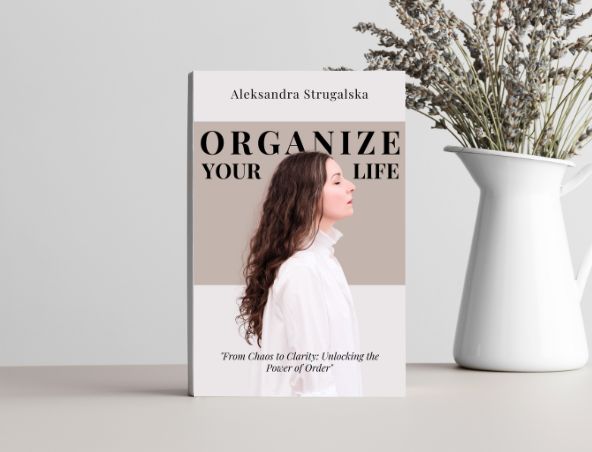
Organize your life.
The first publication in the Untold product series, created to share methodology for organizing everyday life, cultivating systematic discipline, and developing proper habits. Drawing from the author's experience, knowledge, beliefs, and commonly available coaching tools, she aims to inspire you to take action and present you with a straightforward approach to achieving fulfillment and building self-esteem. Written in a simple way, it contains examples from everyday life, practical tips, exercises, and beautiful graphics. Available in e-book and audiobook.

Leave a Reply